
Benchmark Scientific has built its product line around a straightforward idea: laboratory equipment should combine useful technology with practical design and strong value. The company develops equipment for research laboratories with an emphasis on improving efficiency, safety, and experimental results through next-generation technology.
That philosophy has resulted in a diverse lineup covering many of the everyday processes that keep modern laboratories moving. From maintaining cultures at controlled temperatures to separating samples, mixing tubes, sterilizing instruments, heating solutions, and providing continuous agitation, Benchmark Scientific equipment can be found at several different stages of a typical laboratory workflow.
The Benchmark Scientific lineup available from Hogentogler includes eight major equipment categories: incubators, centrifuges, vortex mixers, rockers and rotators, incubator shakers, autoclaves, hotplates and stirrers, and orbital shakers.
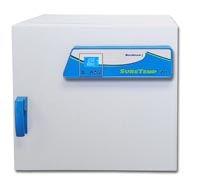
Laboratory incubators create stable, controlled environments for applications involving microbiological cultures, cell samples, test materials, and other specimens that require consistent temperatures. They are staples in microbiology, clinical, pharmaceutical, biotechnology, food testing, educational, and research laboratories.
Benchmark Scientific incubators are particularly well suited to laboratories looking for reliable temperature control in compact, practical equipment. Depending on the model, users can choose equipment appropriate for routine incubation, refrigerated applications, or other temperature-controlled laboratory procedures.
The real advantage of a dedicated laboratory incubator is consistency. Maintaining samples at a controlled temperature over hours or days requires more than simply producing heat. Temperature uniformity, recovery after the door is opened, straightforward controls, and an interior that is easy to organize all contribute to reproducible laboratory work.
Benchmark understands that an incubator often spends most of its working life quietly doing one enormously important job. Its equipment emphasizes practical operation rather than unnecessary complexity, making these incubators especially attractive for busy laboratories that want dependable temperature control without turning routine incubation into a science project of its own.
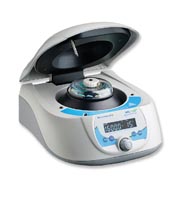
Centrifuges use rotational force to separate components of a sample according to differences in density. Depending on rotor configuration, speed, and capacity, laboratory centrifuges can handle applications ranging from quick microtube spin-downs to routine processing of larger sample volumes.
Benchmark Scientific centrifuges serve research, molecular biology, clinical, educational, biotechnology, and general laboratory applications. The category is particularly useful for labs performing repetitive sample-preparation procedures where speed, rotor versatility, and simple operation can make a noticeable difference in daily productivity.
Choosing a centrifuge requires consideration of more than maximum RPM. Laboratories should also evaluate relative centrifugal force, tube capacity, rotor compatibility, refrigeration requirements, footprint, and the types of protocols the instrument will perform most frequently.
Benchmark does compact laboratory equipment particularly well, and centrifuges are a perfect example. These instruments are designed around the way scientists actually use their benches: space is precious, workflows move quickly, and nobody wants to navigate a miniature flight deck just to spin a dozen tubes. The result is an appealing combination of performance and everyday usability.
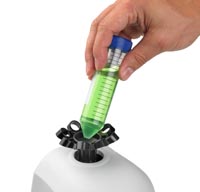
Vortex mixers are among the simplest pieces of laboratory equipment, but also among the most frequently used. They rapidly agitate liquid samples by creating a vortex inside tubes, vials, and other small containers, allowing users to resuspend pellets, mix reagents, homogenize solutions, and prepare samples for subsequent testing.
Benchmark Scientific vortex mixers are designed for quick, repeatable mixing at the laboratory bench. Models and accessories can accommodate different vessels and workflows, making the category useful for molecular biology, microbiology, clinical testing, chemistry, pharmaceutical research, and educational laboratories.
For high-throughput environments, the ability to move from one sample to the next quickly matters. A responsive vortex mixer with intuitive controls can shave small amounts of time from hundreds of repetitive operations—which is exactly how seemingly modest pieces of equipment become laboratory favorites.
A good vortex mixer almost disappears into the workflow. You reach for it, mix the sample, and move on without thinking about the instrument itself. Benchmark's focus on compact dimensions and straightforward operation makes its vortex mixers natural bench companions, particularly in laboratories where they're going to be used dozens—or hundreds—of times per day.
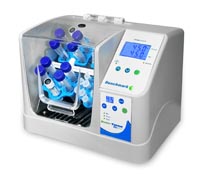
Laboratory rockers and rotators provide continuous, controlled movement for samples that require gentle agitation rather than vigorous mixing. Applications can include staining and destaining gels, washing membranes, mixing blood samples, maintaining suspensions, hybridization procedures, and other protocols where consistent movement is required over extended periods.
The category encompasses different styles of motion because the way a sample moves matters. Rocking platforms typically produce a controlled back-and-forth tilting action, while rotators continuously turn tubes or other vessels. Selecting between them depends on the vessel, sample, mixing intensity, and protocol.
Benchmark Scientific offers these instruments for laboratories that need reliable unattended agitation without surrendering excessive bench space.
These are classic "set it and get back to work" instruments. Benchmark's approach fits that job beautifully. Rockers and rotators don't need to be flashy; they need to deliver consistent motion for as long as the protocol requires it. They're particularly valuable for labs with repetitive washing, staining, suspension, or mixing procedures where manual agitation would be wildly inefficient.
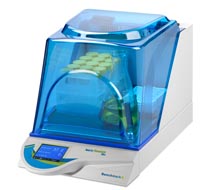
Incubator shakers combine controlled-temperature incubation with orbital agitation, allowing laboratories to maintain environmental conditions while continuously mixing samples. They are widely used for bacterial and yeast cultures, cell growth, protein expression, solubility studies, and other biological and biochemical applications.
Combining incubation and shaking within one instrument offers an obvious workflow advantage. Instead of placing a separate shaker inside an incubator—or trying to coordinate two independent systems—the laboratory can control temperature and agitation as part of the same process.
Benchmark Scientific incubator shakers are particularly relevant for microbiology, molecular biology, biotechnology, pharmaceutical, and academic research laboratories where cultured samples require both dependable temperature control and continuous aeration or agitation.
This category showcases Benchmark's knack for packing serious functionality into efficient laboratory equipment. Combining two critical processes in one instrument saves space and simplifies workflows, while giving researchers better control over culture conditions. For laboratories growing bacteria, yeast, or other organisms routinely, that's a pretty compelling use of bench space.
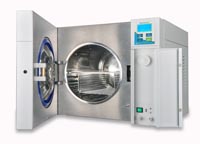
Laboratory autoclaves sterilize equipment and materials using high-temperature saturated steam under pressure. They are used to sterilize glassware, instruments, media, liquids, laboratory supplies, and certain types of waste in microbiology, research, healthcare, pharmaceutical, educational, and biotechnology settings.
Benchmark Scientific autoclaves provide laboratories with dedicated benchtop sterilization capability, making them especially useful for facilities that need convenient access to steam sterilization without relying exclusively on larger centralized equipment.
When choosing a laboratory autoclave, chamber capacity is only part of the equation. Users should consider cycle requirements, the types of loads being processed, available laboratory space, electrical requirements, and appropriate operating and validation procedures.
Sterilization is one place where convenience has real workflow consequences. Having an appropriately sized autoclave close to the work can eliminate trips to a centralized sterilization facility and help laboratories turn instruments, glassware, and media around faster. Benchmark's benchtop approach makes professional steam sterilization accessible to labs that don't need—or have room for—a giant floor-standing system.
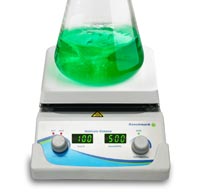
Laboratory hotplates and magnetic stirrers are workhorses for preparing solutions, dissolving compounds, heating reagents, maintaining sample temperatures, and producing homogeneous mixtures. Combination hotplate stirrers provide both heating and magnetic agitation from a single instrument, while application-specific configurations can accommodate different laboratory requirements.
These instruments appear in virtually every kind of laboratory, including chemistry, biology, pharmaceutical, environmental, food testing, industrial quality control, and educational facilities.
Benchmark Scientific hotplates and stirrers are designed around practical benchtop use, providing laboratories with controlled heating and/or stirring without consuming unnecessary workspace. Depending on the application, factors such as temperature range, stirring speed, platform dimensions, vessel size, and control requirements should guide instrument selection.
Few pieces of laboratory equipment earn their keep quite like a hotplate stirrer. One day it's dissolving a buffer; the next it's heating a reagent or keeping a solution uniformly mixed. Benchmark's equipment fits nicely into that general-purpose role, giving laboratories a compact tool that can become one of the hardest-working instruments on the bench.
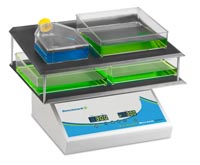
Orbital shakers move samples in a continuous circular orbit, producing consistent agitation across flasks, bottles, plates, and other laboratory vessels. They are widely used for cell culture, bacterial growth, solubility studies, staining, washing, extraction, sample preparation, and general mixing.
Unlike vortex mixers, which are generally intended for rapid mixing of individual tubes or small groups of vessels, orbital shakers are designed for sustained agitation. Samples can remain on the platform for extended periods while the shaker maintains a controlled orbital motion.
Platform size, speed range, orbit diameter, vessel capacity, and available clamps or accessories are important considerations when selecting an orbital shaker. Laboratories processing multiple vessels simultaneously should pay particular attention to platform configuration and load capacity.
Orbital shakers are another area where Benchmark's emphasis on useful, space-conscious equipment makes sense. They automate a task that would otherwise be tedious or impossible to reproduce manually and can keep multiple samples moving consistently for hours at a time. That's exactly the sort of quiet productivity boost that makes a piece of laboratory equipment worth its footprint.
Benchmark Scientific manufactures equipment for many common laboratory processes. The categories available from Hogentogler include laboratory incubators, centrifuges, vortex mixers, rockers and rotators, incubator shakers, autoclaves, hotplates and stirrers, and orbital shakers.
Benchmark equipment is well suited to research, biotechnology, pharmaceutical, microbiology, molecular biology, clinical, industrial, quality control, and educational laboratories. The appropriate instrument depends on the specific application and protocol.
A vortex mixer typically provides rapid, vigorous mixing for tubes and other small containers and is often used for relatively short mixing periods. An orbital shaker moves samples continuously in a circular orbit and is better suited to sustained agitation of multiple vessels.
An orbital shaker provides controlled agitation, while an incubator shaker combines orbital agitation with a temperature-controlled chamber. Incubator shakers are therefore particularly useful for applications such as microbial culture that require both continuous shaking and controlled incubation.
They perform very different kinds of mixing. Vortex mixers provide vigorous agitation for rapid sample mixing, while rockers produce gentler continuous movement appropriate for procedures such as staining, washing, and maintaining suspensions.
Yes. A benchtop autoclave can be an efficient solution when a laboratory needs routine steam sterilization but does not require the capacity of a large floor-standing unit. The correct model should always be selected according to load type, volume, cycle requirements, and facility procedures.
Benchmark Scientific occupies an appealing position in the laboratory equipment market because its portfolio addresses an unusually broad collection of everyday bench processes. A laboratory could conceivably use Benchmark equipment to incubate a culture, centrifuge the resulting samples, vortex individual tubes, maintain continuous agitation, prepare heated solutions, and sterilize reusable equipment afterward.
That breadth is backed by a company philosophy centered on innovative, cost-effective products designed to improve laboratory efficiency, safety, and results, with an emphasis on next-generation technology, quality, and value.
For research laboratories, universities, biotechnology companies, pharmaceutical facilities, clinical environments, and industrial labs, that combination makes Benchmark Scientific worth considering whenever the goal is capable laboratory equipment that earns its place on a crowded bench.